
Margate Directory Collections by Source
Margate city directory research begins with Broward County Library, but it does not end there. Main Library keeps a searchable City Directories database in its fifth-floor Business, Law and Government section. Periodicals holds older telephone books on microfiche and staff can retrieve them. The State Library of Florida arranges city directories by place and year, while the Library of Congress lists long runs of Fort Lauderdale telephone books. Those regional books must be checked one volume at a time for Margate coverage. No official catalog found during the research published a complete Margate-only title and year run, so the honest approach is to ask reference staff before claiming that a given issue survives.
| Directory source | Verified span | Repository | How to consult it |
|---|---|---|---|
| Searchable City Directories database | Local and regional; exact Margate run unpublished | Broward Main Library, fifth floor | Library terminal and reference help |
| Older telephone directories | Exact local run requires inquiry | Main Library Periodicals | Microfiche with staff retrieval |
| Fort Lauderdale telephone books | 1936-1963 runs; white pages 1971/72-1974/75 | Library of Congress | Confirm Margate in each regional volume |
| State Library city directories | Early 1900s to present | State Library of Florida | On-site or reference request |
| Census and directory databases | Federal census through 1950; varied directory coverage | Broward branches | Ancestry Library and Fold3 in branch |
The gaps matter. Directory publishers compiled private lists, skipped some homes, and did not always publish each year. The Library of Congress warns that a stated run can hide gaps of up to five years. A blank result is not proof that someone had left Broward County. Check initials, alternate surname spacing, the reverse street pages, and the issues on both sides of the target year. Small communities were also bundled into nearby-city books, which is especially relevant to postwar Margate.
Margate Directory Research Upstairs
The most direct local access point is the Broward County Library genealogy collection. Main Library's fifth floor provides the searchable directory database, while Periodicals adds telephone directories, historic building surveys, local newspaper microform, and staff help with the readers. Margate Catharine Young Branch also provides in-branch access to Ancestry Library Edition and Fold3. A branch search can test names and dates before a trip to downtown Fort Lauderdale.
A directory request works best when it includes the surname, likely address, and a narrow year range. Ask whether the volume has both alphabetical and reverse street sections. If a death or sudden disappearance ends the trail, the library accepts remote obituary questions at periodicals@broward.org. The collection is broad, but the staff cautions that not every death appeared in print.
The captured library research page shows the official starting point for the genealogy databases and historical material.
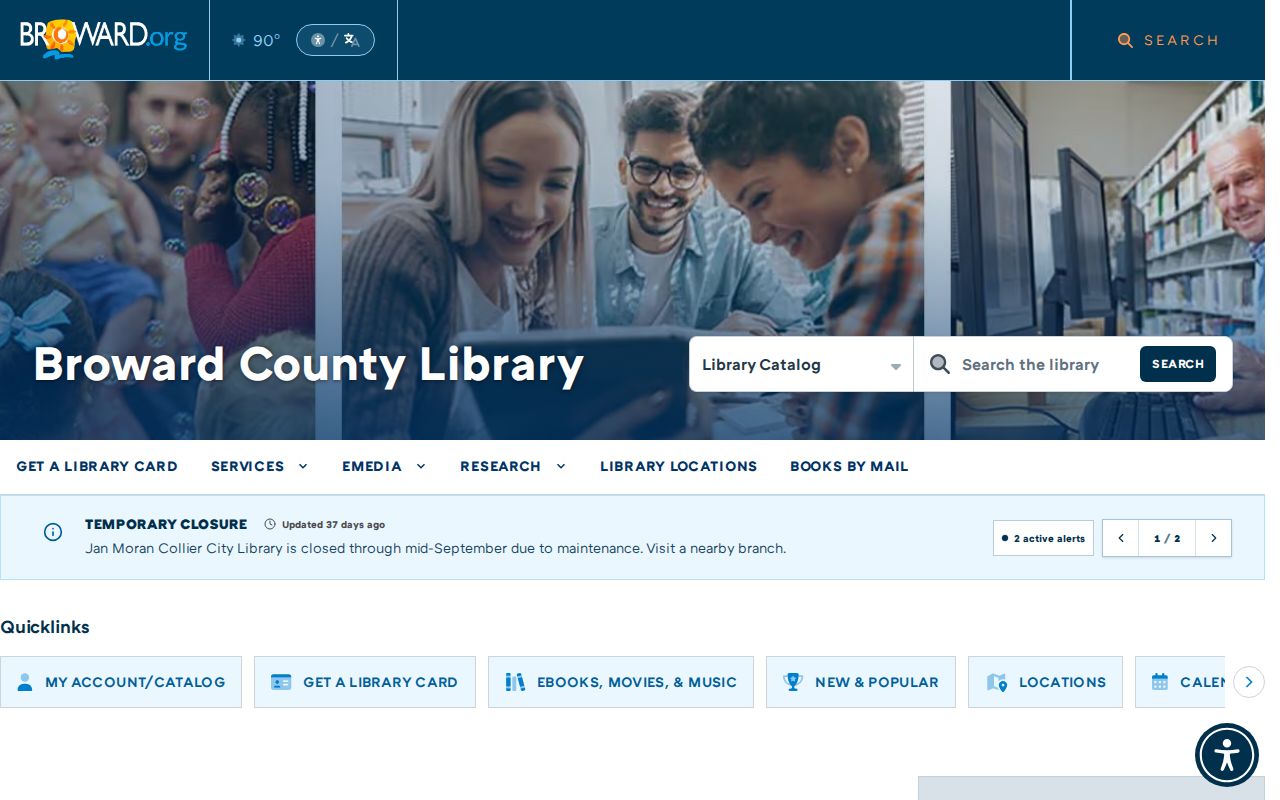
That library layer is vital because Margate's exact directory shelf is not fully described in a public online catalog.
Why Margate Uses Regional Directories
Margate began with a residential land purchase in 1953, became a town in 1955, and gained city status in 1961. A book issued before 1955 cannot be assumed to have a Margate section. It may instead name farms, roads, or nearby settlements that occupied the same part of Broward. Later Fort Lauderdale, Pompano, or Deerfield regional volumes are stronger candidates because publishers often grouped smaller communities with a larger market.
This history changes the search order. Start near the date when a family is known to have lived in Margate, then work backward. The city's planned streets, canals, utilities, and subdivisions arrived quickly after 1953. For an address that does not appear in an older volume, compare a subdivision plat or deed rather than forcing the modern street name into a book created before the neighborhood existed.
Margate Directory History Beyond Shelves
The Broward Digital Archives adds photographs, newspapers, oral histories, manuscripts, and finding aids. It does not replace a city directory, but it can explain a listed address, business, or family name. Oral histories contain memories reaching back into the 1890s, well before Margate's creation, and the archive spans several county special collections.
The live archive landing page is preserved in this Broward Digital Archives view.
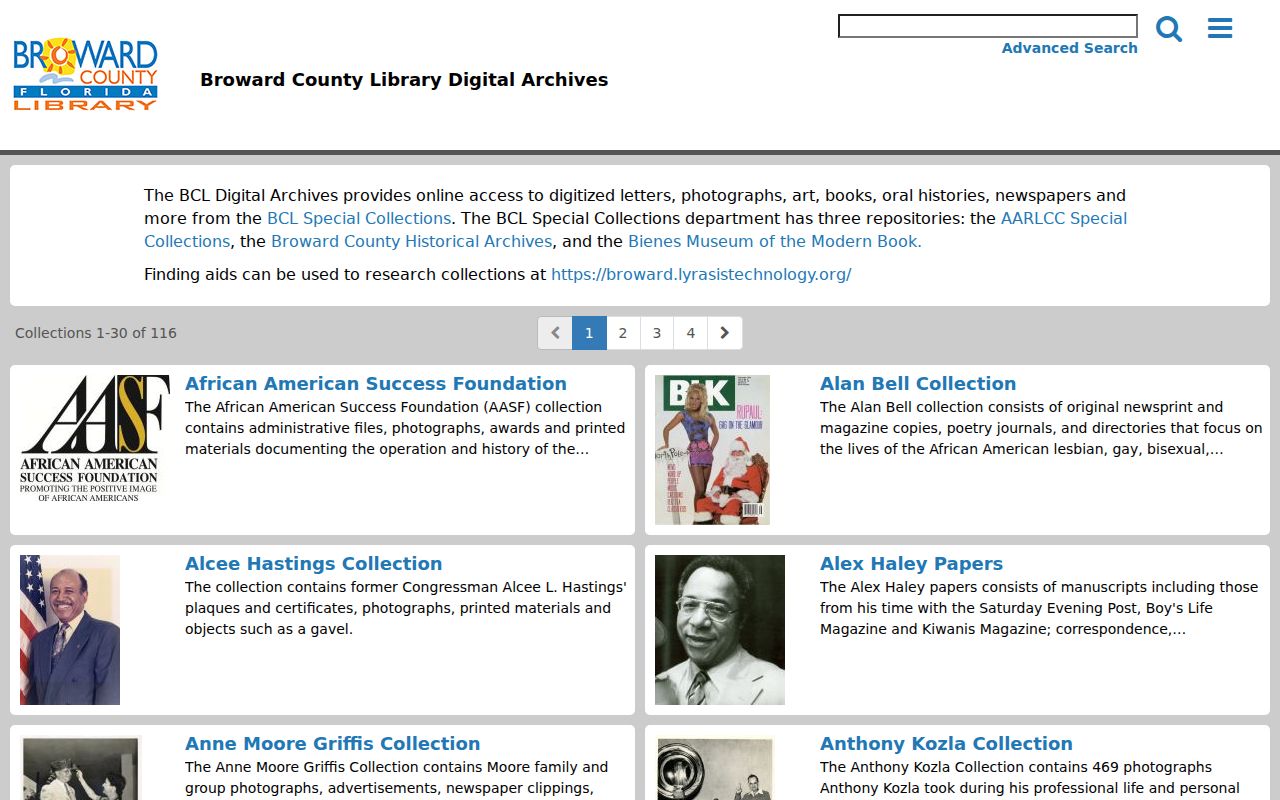
Use a name or street from a directory entry as the archive query. Newspaper captions and finding aids can supply dates or name variants that lead back to another issue.
Florida Memory and the State Archives provide another official path. A Florida Memory sample from Tallahassee documents how Polk-style entries were structured, but it is not evidence that the same title covered Margate. That distinction keeps the method useful without inventing local holdings.
Reading a Margate Directory Entry
Read the key before reading the person. A period directory may shorten occupations, mark a spouse in parentheses, label a widow, or use one letter to distinguish a householder from a roomer. Florida Memory's official sample shows why exact transcription helps. Leonard A. Wesson appears with a spouse, home address, and work roles in one issue, while earlier entries vary his middle initial and occupation. A rigid name search would miss part of that trail.
| Personal name | Surname, given name, initials, and sometimes a spouse in parentheses |
|---|---|
| Work line | Occupation, employer, role, or business address when supplied |
| Home line | Street address, telephone, and a residence or boarding mark |
| Status mark | Householder, roomer, owner, vacancy, or cross-reference symbols |
| Widow notation | A surviving spouse may be listed with the deceased spouse's name |
- Criss-cross directory
- An address-first list arranged by street, often followed by occupants and phone numbers.
- Householder index
- A list focused on the main person associated with each home rather than every member of the household.
- Abbreviation key
- The publisher's legend for short forms and symbols, usually near the front of the alphabetical section.
Switching views can solve an incomplete entry. The reverse page may mark a property vacant or show the names beside it. Then the alphabetic entry can expand an initial into a full name and add a work role. Photograph or copy the key with the entry so those marks remain clear later.
Margate Directory Census Gap
Federal census schedules are public only through 1950, five years before Margate became a town. The first census after formation, 1960, remains closed until 2032 under the federal 72-year rule. That leaves a real gap for the city's first households. Regional directories, deeds, subdivision plats, permits, and newspapers must do more work here than they would in an older city.
Sanborn fire insurance maps have a similar limit. Broward Library offers authenticated Digital Sanborn Maps covering a broad 1867-1970 scope, but no Margate-specific sheet was verified. Margate's post-1953 planned development makes that absence plausible, yet it does not prove that a map was lost. Search the database and ask reference staff, but use parcel and plat records when no sheet appears.
Margate Directory Turning Points
Three local milestones help set a sensible starting year. They also explain why a regional title can be more useful than an older county book.
- 1953: The planned residential development began with a major land purchase.
- 1955: Margate became a town with about 200 residents and was incorporated on May 30.
- 1961: Margate became a city on June 22.
- 1960s: The local library began in a small room at City Hall.
- 1984: Broward Main Library opened, centralizing many county research resources.
The 1955 and 1961 dates are not a conflict. One marks town formation and incorporation; the other marks city status. Catalog notes and local histories may use either date, so record both when evaluating a collection description.
Trace Families Through Margate Directories
A city directory works best as a sequence, not a single hit. Begin with the issue nearest a firm date. Copy the entry as printed, including initials, spouse, phone, address, occupation, and every symbol. Then compare an earlier and later issue. A move may appear as a changed street, while a new widow notation or missing spouse can point toward newspapers, an obituary, or probate records.
- Locate the closest issue and test the full surname plus initials and spelling variants.
- Copy the entry and consult that volume's abbreviation key.
- Turn to the reverse street section to check the address sequence and vacancy marks.
- Move issue by issue, noting the first and last appearance at each address.
- Pair the result with the 1950 census, deeds, newspaper notices, and public probate records.
Disappearance has several possible causes. The household may have moved, declined a listing, been omitted by the publisher, or changed the name under which it was indexed. Check the address side of the book before deciding. If another occupant appears, the move becomes more likely. If the address vanishes too, a street change or publication gap may be responsible. For current address-keyed sources, continue with the Margate street directory.
Preserve the publication title and issue year with every note. Margate may be filed inside a Broward or regional city directory rather than under a stand-alone city title. That citation lets library staff find the same volume again and helps distinguish a true year-to-year change from a gap in the available run.